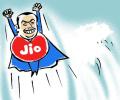
Billionaire Mukesh Ambani's Reliance Jio is India's strongest telecom brand in India, ahead of Bharti Airtel and Vodafone Idea Ltd, according to brand intelligence and data insights company TRA. TRA, formerly Trust Research Advisory, in its 'India's Most Desired Brands 2022' ranked companies according to their brand strength. Reliance Jio topped the telecom category, followed by Bharti Airtel, Vodafone Idea Ltd and BSNL.
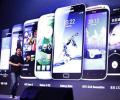
India's smartphone market has fallen by one per cent in the first half of 2022, as shipments of Xiaomi - the top-selling brand - declined 28 per cent due to weak consumer demand in the quarter ended June. According to the International Data Corporation's (IDC's) Worldwide Quarterly Mobile Phone Tracker, 71 million smartphones were shipped from January to June this year. The highest decline was in the below-$100 segment, which lost its market share by 5 per cent.
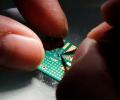
The exclusive club that dominates the global semiconductor fab scenario is about to get a new member. Taiwan, South Korea, and China control nearly 70 per cent of the global capacity. SEMI, the global industry body for semiconductor and electronics design and manufacturing, projects all fabs collectively will churn out 30 million wafers a month this year.
Reliance Jio may not ask for a premium for its 5G services in the initial stages of the launch, according to sources in the company. The company will roll out 5G commercial services in four cities -Delhi, Mumbai, Chennai, and Kolkata - around Diwali this month and slowly ramp up the processes for other cities, too. A senior executive, when asked whether Jio will charge higher tariffs for 5G against 4G, said: "In the initial stages, customers have to adopt 5G, then they will have to find value in the service, and then one can look at monetisation."

For a time it looked as if Apple would never relinquish the top spot in terms of market value.

The finance ministry is looking at a reworked proposal from mobile device makers on how to fight the rampant and growing smuggling of very high end phones. The proposal suggests reducing the basic customs duty (BCD) on phones which have a CIF (cost, insurance and freight or price at landing in the port) value of over Rs 35,000-Rs 40,000. The retail value of these phones is upwards of Rs 70,000.

While consumer electronics, technology, mobile phones, auto and sports-wear categories dominate the top 20, FMCG has only one entry in the list
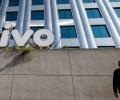
China's Vivo said on Thursday it will export more than one million 'Made in India' smartphones in 2023 to achieve a target announced last year when it sent out its first indigenous shipment to Thailand and Saudi Arabia. Vivo India, known for its economical phones, has proposed investing Rs 7,500 crore in the country and it is set to spend Rs 3,500 crore of that amount by end of this year. According to the firm's India Impact Report 2022, it will start production at a new 'state of the art' manufacturing facility by early 2024 after regulatory clearance.

With their hundreds of years of watch making experience, Swiss watchmakers can afford to take a long view of technological fads and fashions.

Their favourite alternatives: Malaysia, Vietnam and the Philippines. Note, India is missing from that list. And this is despite an attractive financial incentive scheme for OSAT players. The reason, said a senior executive of a US chip company who had a meeting in Taiwan just a few weeks ago, is that "they want more predictability in government policy because they plan to put in big money."

Prime Minister Narendra Modi, speaking at the India Mobile Congress in New Delhi on Friday reeled out statistics to show how India has turned into an exporter of mobile phones from being an importer and how big tech companies -- from Apple to Google -- are lining up to become manufacturers in the country. He said after the fastest rollout of 5G mobile telephony services, India will lead the world on 6G. Recalling the launch of 5G technology in the country on October 1, 2022, he remarked that within a year there are about 5 lakh 5G base stations across the country.

The government believes firms which are subject to China's laws could be forced to hand over information to Beijing's security services.

'Last year we sold 18 million phones in India, this year we should do 23-24 million, and next year our target is to hit 40 million.'

The apex court has settled the long-pending dispute between companies such as Samsung, IBM, HP & others and the tax department.

According to a 2013 CLSA report , online retail in India was worth $3.1 billion, or about 10% of the country's organised retail market
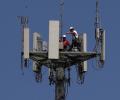
While the government has not barred procurement of equipment from Chinese companies, the process to amend the general financial rules (GFR) 2017 has started. This will impose restrictions on bidders in public procurement from countries that share a land border with India, reports Megha Manchanda.
According to the Consumer Electronics and Appliances Manufacturers Association (CEAMA), the estimated Rs 35,000 crore (Rs 350 billion) Indian consumer durables market, which has giants like LG, Sony, Videocon, Samsung and Panasonic, did not grow as expected, with air-conditioners being the biggest spoilsport.
Carrier is the number one or two in most markets in the world. So I don't see why India should remain an exception.

Wipro makes it to the up-and-coming companies with potential to join the top 50 list.

Components manufactured in India are low-value products like casing and box packaging that constitute 5% of the bill for materials required in phone manufacturing.

In the run-up to Apple CEO Tim Cook's visit to India, government officials are finalising the talk points with the Cupertino-headquartered tech major. Officials said that the government would like Apple to "deepen" the company's engagement in the manufacturing and assembly of iPhones in the country and not limit itself only to the minimum commitments made under the production-linked incentive (PLI) scheme for mobile devices. The conversations between the two sides are likely to focus on that.

Google, in its latest appeal to the Supreme Court, has said the Competition Commission of India (CCI) is protecting Amazon's interests after having complained that India's anti-competition body (CCI) had copied part of a European Commission ruling against it for allegedly abusing the market dominance of Android. The latest twist to the Google-CCI case comes as Google filed an appeal in the Supreme Court on June 26, against the National Company Law Appellate Tribunal's (NCLAT's) March 29 order. The tech giant's contention is that the NCLAT failed to apply the "effect analysis" part in the CCI order.

Indian plants -- who plan to begin production with 28 nano metre chips -- will take two to four years to get off the ground. By that time, in the fast changing world of chip making, the global market would have shifted to 22 nm.

Though leading brands like Samsung, Apple, Xiaomi, OnePlus, and Oppo managed to absorb the initial lockdown shock and resumed their local production back to 60 per cent, they would likely suffer a 20-25 per cent loss of sales in the October-December quarter.

India must integrate more with East Asia by getting into regional trade arrangements, lower its tariff walls, and improve the quality of its workforce, suggests T N Ninan.

The government on Thursday tweaked curbs on imports of laptops and computers as it allowed importers to bring in shipments of IT hardware from overseas on a mere 'authorisation' upon detailing quantity and value. The new 'import management system' is aimed at monitoring shipments of laptops, tablets and computers into the country without hurting market supply or creating a cumbersome licensing regime. The announcement is likely to provide relief to companies in the IT hardware segment in India as they had flagged concerns over the imposition of a strict licensing regime for importers.

'Had they agreed to our demands that we raised two years ago, we would have never started our agitation again.'

The government is likely to extend fiscal incentives for production of toys, bicycles and leather and footwear in the forthcoming budget as it looks to expand production linked incentive (PLI) scheme to cover more high-employment potential sectors, sources said. The government has already rolled out the scheme with an outlay of about Rs 2 lakh crore for as many as 14 sectors, including automobiles and auto components, white goods, pharma, textiles, food products, high efficiency solar PV modules, advance chemistry cell and speciality steel. The scheme aims to make domestic manufacturing globally competitive and create global champions in manufacturing, and it is yielding solid results, sources said.

In a communication to the empowered committee on PLI recently, the Indian Cellular & Electronics Association (ICEA) has stated that except one player (Samsung), all the other eight players (which include vendors of Apple Inc) selected under the scheme were facing numerous challenges in fulfilling the qualification criteria.

The Department of Telecommunications (DOT) on Wednesday received over Rs 17,873 crore from companies towards 5G spectrum dues. Nearly half the amount (Rs 8312.4 crore) was paid by Bharti Airtel, which made advance payments for four years to free up cash for future investments. Reliance Jio and Vodafone Idea paid Rs 7,864 crore and Rs 1,680 crore, respectively.

Home-grown companies, including electronics manufacturing services (EMS) firm Dixon Technologies and mobile device maker Lava International, have started exploratory talks with Chinese sub-assemblies and component players for setting up joint ventures (JVs) in the country. Sources in the industry say many domestic companies have also had preliminary discussions with original design manufacturers (ODMs) in China to look at a JV model for manufacturing smartphones. Key ODM players in mobile devices in China include Longcheer, Huaqin, and Wingtech, which has already set up a plant in Tirupati.

Manisha Sharma (name changed) was always among the high achievers in her company. She was recognised and rewarded for those efforts as well. Mid-December 2022, however, she received a jolt: an email informing her that she had been laid off - along with several of her colleagues. Sharma worked for a big tech firm, which had decided to downsize. And just like that, she was asked to go. "It did come as a shock," she says. "I did not take calls for the first two days, but then realised there is no point in beating oneself up for a situation that's not in your hand. "I thought let this be an opportunity to take a break. I'll now start looking for a job," she adds.

In the late 1990s, Japanese electronics brand Aiwa tied up with a maverick entrepreneur, Kabir Mulchandani, to sell its consumer electronic products. Founder of Baron International, Mulchandani, all of 26 at that time, had already disrupted the television market through a tie-up with another Japanese player, Akai. With a strategy that relied on heavy discounts, exchange offers and freebies, Akai was selling in huge volumes.

One needs to charge the device every four days, which can provide over 65,000 blood readings and counts.

The onslaught of Chinese mobile brands is virtually obliterating Indian brands, especially in terms of value. According to industry estimates based on excise and Custom duty trends, the value share of Indian brands (across smartphones and feature phones, operator phone sales - which is mostly Jio phones - and the value of phones smuggled into the country) has dropped to a mere 1.2 per cent in January-October 2021 compared to 25.4 per cent in the calendar year 2015. In the same period, the Chinese have established their domination, hitting a value share of 64.5 per cent, up from 17.8 per cent.

Is self-reliance the right approach in a mega-buck game, or better to be part of a network? asks T N Ninan.
Going forward, the Korean company's real competition could be nimble-footed Indian companies, more than the Nokia-Microsoft combine.

India has become world's 2nd largest mobile phone: Modi

Engineers based in India are estimated to be writing roughly 35 per cent of the 100 million lines of codes required to develop one fully driverless car for global vehicle makers.
